
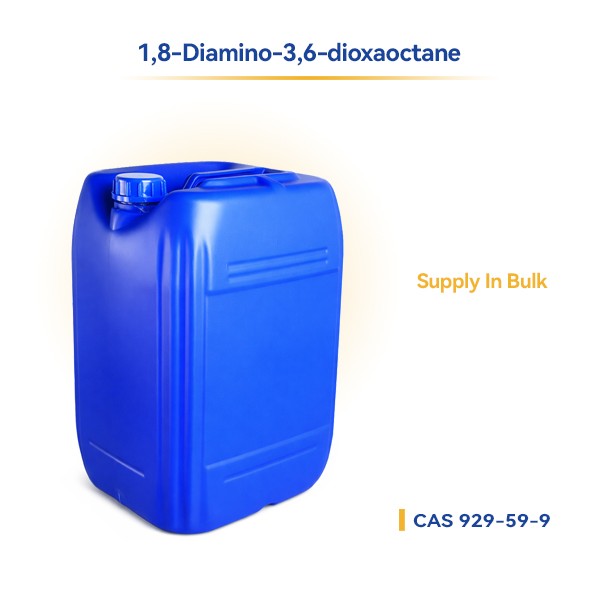
1,8-Diamino-3,6-dioxaoctane CAS 929-59-9
Aure Chemical Supplies 1,8-Diamino-3,6-dioxaoctane CAS 929-59-9 for PEG Linker and Specialty Synthesis
1,8-Diamino-3,6-dioxaoctane is a short polyether diamine containing two ether oxygen atoms and two terminal primary amino groups. Also known as 1,2-bis(2-aminoethoxy)ethane or 2,2'-(ethylenedioxy)bis(ethylamine), it provides a flexible, water-compatible spacer for selected organic synthesis, linker preparation and bioconjugation research applications. Aure Chemical supports sourcing for pharmaceutical intermediate development and specialty synthesis projects.
The terminal amino groups can participate in amide formation and other amine-based transformations. The reference COA reports a GC area purity of 98.9%, water content of 0.3% and a light yellow clear liquid appearance. Final suitability depends on the required specification, impurity controls and intended synthesis route.
Basic Information
Product identity and reference physical properties are summarized below. The reported quality limits and reference-sample results are listed separately in the COA table.
| CAS No. | 929-59-9 |
|---|---|
| EC No. | 213-203-6 |
| Chemical Synonyms | 1,2-Bis(2-aminoethoxy)ethane; 2,2'-(ethylenedioxy)bis(ethylamine); ethylene glycol bis(2-aminoethyl) ether |
| PEG Catalog Name | Amino-PEG2-Amine. Confirm linker identity using CAS 929-59-9 and the chemical structure. |
| Linear Formula | H2N(CH2CH2O)2CH2CH2NH2 |
| Molecular Formula | C6H16N2O2 |
| Molecular Weight | 148.20 g/mol |
| Appearance | Colorless to light yellow clear liquid (reported specification) |
| Purity | ≥98.0% (GC, area%; reported specification) |
| Water Content | ≤0.5% by Karl Fischer (reported specification) |
| Boiling Point | 105-109 °C at 6 mmHg (reference; reduced pressure) |
| Density | 1.015 g/mL at 25 °C (reference) |
| Water Solubility | Completely miscible (reference) |
| Storage Conditions | The reference COA specifies room-temperature storage in a dry, ventilated place, with the container tightly closed. Follow the product label and current SDS for any additional requirements. |
| Chemical Structure | 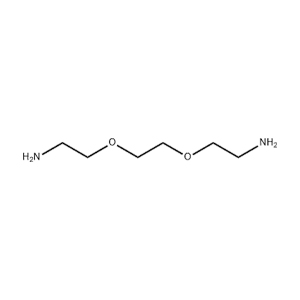 |
Reference COA and Quality Specifications
The following specifications and results are taken from a reference COA. Reference results describe the tested sample. Review the batch-specific COA and agreed specification for an actual order.
| Test Item | Reported Specification | Reference Result |
|---|---|---|
| Appearance | Colorless to light yellow clear liquid | Light yellow clear liquid |
| Water (Karl Fischer, %) | ≤0.5% | 0.3% |
| Purity (GC, area%) | ≥98.0% | 98.9% |
GC area purity is a chromatographic area result and should not be interpreted as a mass-fraction assay. Water content is reported separately. Additional identity, related-substance or residual-solvent requirements should be agreed before order confirmation.
Key Applications
Short polyether linker intermediate: The two terminal amino groups and ether-containing spacer support construction of functionalized molecules and conjugates in research and specialty synthesis.
Molecular linker intermediate: Provides a bifunctional building block for linking selected functional groups through amide formation or other amine-based reactions. Reaction selectivity depends on the coupling strategy and target structure.
Bioconjugation research: Can be evaluated as a spacer in biomolecule labeling and surface-functionalization studies where amino end groups are required for further reaction.
Fine chemical intermediate: Supports preparation of specialty intermediates requiring a short, water-compatible diamine structure.
Process development: Can be evaluated during route screening, optimization and scale-up studies for polyether-containing intermediates, with quality requirements matched to the intended process.
Why Work with Aure Chemical for 1,8-Diamino-3,6-dioxaoctane
Specification review: Appearance, GC area purity, water content and additional analytical requirements can be reviewed against buyer needs.
Supply coordination: Availability, order quantity, lead time and shipping terms are confirmed for the proposed grade and destination.
SDS and COA support: Product documentation can be requested for purchasing, quality review and shipment planning. Confirm the documentation applicable to the selected material and batch.
Packaging and technical service: Container compatibility, net weight, closure integrity and handling requirements can be discussed according to the order and transport route.
Packaging and Storage
Packaging: Use compatible, securely sealed liquid containers. Container material, fill weight and dangerous goods packaging requirements should be confirmed for the actual order.
Storage: The reference COA specifies room temperature, a dry and ventilated location, and an airtight container. Confirm any additional temperature, light-protection or inert-gas requirements against the product label and SDS.
Opened containers: Minimize exposure during transfer and reseal promptly. Maintain the storage conditions specified for the supplied grade after opening.
Order planning: Packaging format, shipment feasibility, retest period and shelf life should be agreed for the proposed quantity, batch and destination.
Safety and Handling
This reference profile follows a reviewed EU SDS for CAS 929-59-9. Confirm the complete classification and handling instructions using the current SDS for the supplied grade and destination market.
Reference GHS classification: Acute toxicity (oral), Category 4; skin corrosion, Category 1B; serious eye damage, Category 1; respiratory sensitization, Category 1; skin sensitization, Category 1.
Signal word: Danger.
H302: Harmful if swallowed.
H314: Causes severe skin burns and eye damage.
H317: May cause an allergic skin reaction.
H334: May cause allergy or asthma symptoms or breathing difficulties if inhaled.



Handling: Use effective local exhaust and suitable chemical-resistant gloves, protective clothing and eye/face protection. Avoid breathing vapor or mist and prevent skin and eye contact. Follow SDS requirements for respiratory protection and storage, including any inert-gas instructions.
Reference transport entry: UN 2735; POLYAMINES, LIQUID, CORROSIVE, N.O.S.; Class 8; Packing Group II. Confirm the shipping name, packing group, labels and packaging using the current SDS and transport documents for the actual shipment.
Packaging
25 L HDPE drum
Final packaging, capacity and net weight are confirmed in the quotation and order.