
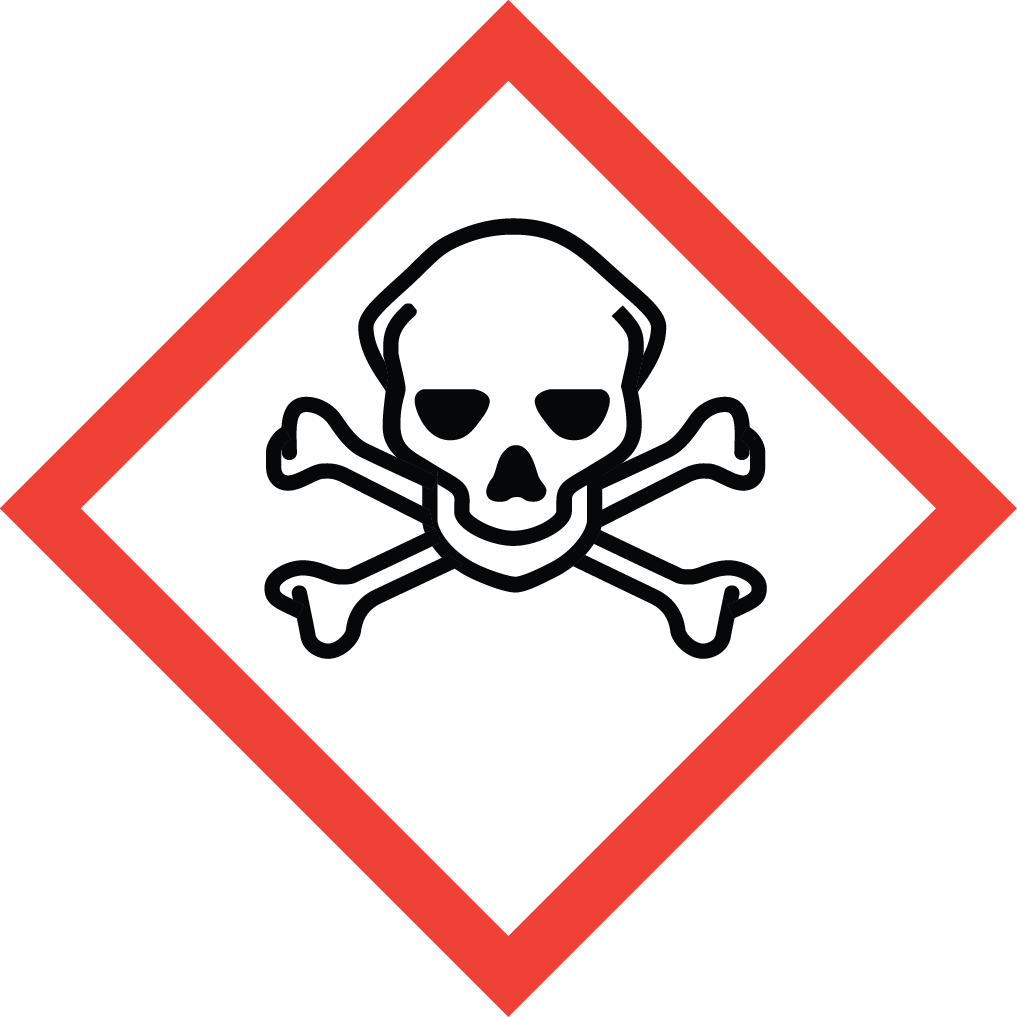
Reference Hazards: Harmful if swallowed; toxic in contact with skin or if inhaled; causes severe skin burns and eye damage. Prevent exposure to vapors or mist and avoid all direct contact.
Handling: Use ventilation and protective equipment selected according to the current SDS and workplace risk assessment, including compatible gloves, protective clothing, and eye or face protection. Follow SDS instructions for respiratory protection and emergency response.
Storage: The reference COA specifies sealed storage, protected from light, at ambient temperature below 30 °C. Confirm the applicable storage instructions in the current product SDS and technical documentation. Keep containers closed and observe the documented requirements for ventilation, segregation, and container compatibility.
Transport Classification: Confirm the UN number, proper shipping name, hazard class, subsidiary hazards, and packing group using the current SDS for the actual product and applicable transport mode. Obtain carrier acceptance before shipment.
Environmental Protection and Disposal: Keep the material out of drains and waterways. Follow the current SDS and local requirements for spill containment, waste handling, and disposal.
Documentation: Request the current SDS and relevant batch COA before ordering. Refer to the SDS for complete labeling requirements, including environmental hazards.
Bis(2-ethylhexyl)amine CAS 106-20-7
Bis(2-ethylhexyl)amine (CAS 106-20-7)
Bis(2-ethylhexyl)amine (CAS No. 106-20-7), also known as di(2-ethylhexyl)amine or diisooctylamine, is a branched secondary aliphatic amine. Its nitrogen bears two 2-ethylhexyl groups and one hydrogen, providing a basic amine center and a hydrophobic C16 framework. It is used principally as an intermediate for corrosion inhibitors and in specialty chemical synthesis. Aure Chemical supports China sourcing, specification review, quality documentation, and international export coordination. The reference COA below specifies purity ≥98.5% and reports a single-lot GC result of 99.4%.
Basic Information of Bis(2-ethylhexyl)amine
The identifiers below describe bis(2-ethylhexyl)amine, a secondary monoamine supplied as a liquid. Physical properties are general substance references, while the quality analysis separately lists the reported specification and lot results.
| CAS No.: | 106-20-7 |
|---|---|
| EC No.: | 203-372-4 |
| Molecular Formula: | C₁₆H₃₅N |
| Condensed Structural Formula: | [CH₃(CH₂)₃CH(CH₂CH₃)CH₂]₂NH |
| Molecular Weight: | 241.46 g/mol |
| Amine Type: | Secondary amine (R₂NH) |
| Appearance: | Colorless, clear liquid at 25 °C (reference COA specification) |
| Odor: | Amine-like odor |
| Boiling Point: | 123 °C at 5 mmHg (literature reference, reduced pressure) |
| Density: | 0.805 g/mL at 25 °C (literature reference) |
| Solubility: | Very low solubility in water; soluble in ethanol and hydrocarbon solvents (reference properties) |
| Flash Point: | 130 °C, Pensky–Martens closed cup (reference value; confirm the applicable product SDS) |
| Chemical Structure: | 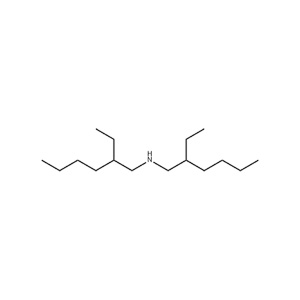 |
Reference Quality Analysis
The following analysis provides a technical reference for bis(2-ethylhexyl)amine, covering GC purity, Karl Fischer moisture, Pt-Co color, and visual appearance at 25 °C. Purity and water content are relevant to reaction planning, while color may be important when evaluating material for specialty additives and formulated products.
Physical and Chemical Quality Parameters
| Test Item | Reported Specification | Reference Result |
|---|---|---|
| Appearance (25 °C; visual inspection) | Colorless, clear liquid | Qualified |
| Moisture (Karl Fischer) | ≤0.3 wt.% | 0.1 wt.% |
| Color (APHA; Pt-Co) | ≤30 | 10 |
| Purity (GC) | ≥98.5% | 99.4% |
Moisture is reported on a weight basis. The purity test is identified as GC, but the report does not specify its calculation basis. Customers requiring a particular chromatographic method or limits for individual amine impurities should confirm those requirements separately.
These results represent one analyzed lot and are provided for preliminary technical evaluation. They are not guaranteed results for every shipment. Please contact Aure Chemical to confirm the applicable quality requirements and request the relevant batch-specific Certificate of Analysis (COA) before ordering.
Applications of Bis(2-ethylhexyl)amine
The secondary amine center can form salts and undergo N-substitution or acylation reactions. The two branched alkyl groups provide a lipophilic component for selected derivatives and formulations. Application performance depends on the derivative, formulation, and operating conditions.
Corrosion-Inhibitor Intermediates: A principal industrial use is the manufacture of corrosion inhibitors. Product selection should consider purity, color, water content, and compatibility with the intended inhibitor chemistry. Corrosion protection must be established for the finished formulation and service conditions.
Surface-Active Salts and Specialty Formulations: Its basic amine center and hydrophobic alkyl groups support evaluation in specialty amine-salt and surface-active systems. Emulsification, phase behavior, and compatibility require testing for the selected acid and formulation.
Lubricant-Additive Synthesis: Bis(2-ethylhexyl)amine has been described as a secondary amine reactant in selected lubricant-additive chemistries. Suitability for a particular additive route and the performance of the finished lubricant require process and application validation.
Specialty Organic Synthesis: The N–H group provides a reaction site for preparing N-substituted derivatives and amides. Reaction conditions and impurity limits should be matched to the intended synthesis.
Research and Formulation Development: Used in studies of surfactant-based liquid mixtures and related specialty systems. The reference COA supports preliminary material assessment; research or pilot work may require additional analytical information.
Aure Chemical: Bis(2-ethylhexyl)amine Sourcing and Export Support
Aure Chemical is a chemical trading and export supply business. We support B2B procurement through China chemical sourcing, supplier coordination, specification review, and shipment documentation tailored to the order and destination.
Specification Review: Review GC purity, moisture, color, appearance, and customer-defined impurity limits against available product documentation.
Supplier Coordination: Clarify analytical reporting, supply availability, packaging, and other technical or commercial requirements with the selected supply source.
Quality Documentation: Request the applicable batch COA, current product-specific SDS, and available technical data before material approval.
Technical Communication: Communicate process-specific requirements and obtain clarification where additional testing or a defined analytical method is needed.
International Export Logistics: Coordinate packaging, carrier review, shipping documentation, and destination requirements. Availability, lead time, and shipment terms are confirmed in the quotation and order.
Safety, Handling & Documentation
Bis(2-ethylhexyl)amine presents corrosive and acute-toxicity hazards. The information below is a reference for the substance. Obtain the current SDS for the actual supplied product and destination to confirm the full classification, labeling, handling controls, and transport requirements.

Packaging
200 L steel drum
Final packaging, capacity and net weight are confirmed in the quotation and order.