Synonyms: DEC; Carbonic acid, diethyl ester; Ethyl carbonate; Carbonic ether; Diatol; Diethylcarbonat; Diethylkarbonat

Aure Chemical is a trusted supplier of Diethyl Carbonate, serving international customers with high-quality products, dependable supply capability, and professional chemical sourcing services. We provide support throughout the supply process, including product selection, documentation preparation, packaging coordination, and global delivery.

We can provide customized requirements in terms of product purity, packaging specifications, and other aspects.

Please contact us to obtain the latest product information.
Premium Diethyl Carbonate (CAS 105-58-8)by Aure Chemical
Diethyl Carbonate (DEC), also known as carbonic acid diethyl ester, is a linear organic carbonate with CAS No. 105-58-8. It is a colorless liquid used as a solvent component in lithium-ion battery electrolytes and as a reagent in organic synthesis. Aure Chemical supports sourcing and international export supply from China, including specification review, quality documentation, and shipment coordination.
For battery electrolyte evaluation, procurement requirements should address DEC content, water, residual alcohols, color, and metallic impurities. The battery-grade reference analysis below includes methanol, ethanol, and nine individual metals. A verified moisture result and suitable analytical methods remain necessary for qualification against the buyer’s electrolyte specification.
Basic Information of Diethyl Carbonate
Identity and literature physical properties are provided for general reference. The quality requirements and reference results below are separate from these physical properties and must be confirmed for the supplied grade and batch.
CAS No.:
105-58-8
EC No.:
203-311-1
Condensed Formula:
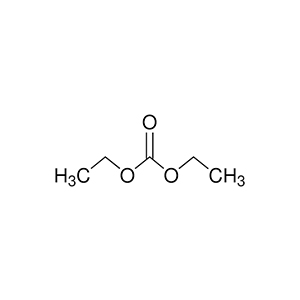
(CH₃CH₂O)₂CO
Molecular Weight:
118.13 g/mol
Appearance:
Colorless, transparent liquid with no visible impurities
Odor:
Mild, ethereal odor (general reference)
Melting Point:
−43 °C (literature reference)
Boiling Point:
126–128 °C (literature reference)
Density:
0.975 g/mL at 25 °C (literature reference)
Water Solubility:
18.8 g/L at 20 °C (published reference)
Flash Point:
25 °C, closed cup (published SDS reference)
Reference Grade / Content Requirement:
Battery grade; reported DEC content specification ≥99.99%. See Reference Quality Analysis for the individual results and moisture qualification note.
Transport Reference:
UN 2366, DIETHYL CARBONATE, Class 3, Packing Group III. Confirm the current product SDS and shipment requirements.
Chemical Structure:
Reference Quality Analysis
These parameters provide a technical reference for battery-grade Diethyl Carbonate. Alcohol residues, moisture, and metal impurities require separate review; the DEC content alone does not establish electrolyte suitability. The moisture result is pending verification of a corrected analysis, as explained below.
Physical and Chemical Quality Parameters
Test Item
Reported Specification
Reference Result
DEC Content
≥99.99%
99.9998%
Methanol
≤20 ppm
N.D.
Ethanol
≤20 ppm
0.5 ppm
Moisture
≤50 ppm
Corrected analytical result pending confirmation
Color (Pt-Co)
≤10 Hazen
<5 Hazen
Specific Gravity (20 °C / 20 °C)
0.975 ± 0.005
0.976
Appearance
Colorless, transparent liquid with no visible impurities
Colorless, transparent liquid with no visible impurities
Moisture qualification note: subtracting the DEC content from 100.00% gives 100.00% − 99.9998% = 0.0002%, equivalent to 2 ppm on a common mass basis. This difference represents all non-DEC components; it does not selectively measure water and includes other impurities. It is therefore not presented as a measured moisture result. Confirm a water-specific analytical result before technical acceptance.
The DEC content unit is stated as w/% in the report, but the analytical method and calculation basis are not supplied. Specific gravity at 20 °C / 20 °C is dimensionless and is distinct from the literature density at 25 °C above.
Trace Metal Analysis
Test Item
Reported Specification
Reference Result
Sodium (Na)
≤1 ppm
0.020 ppm
Potassium (K)
≤1 ppm
0.039 ppm
Copper (Cu)
≤1 ppm
N.D.
Iron (Fe)
≤1 ppm
N.D.
Lead (Pb)
≤1 ppm
N.D.
Zinc (Zn)
≤1 ppm
N.D.
Cadmium (Cd)
≤1 ppm
N.D.
Chromium (Cr)
≤1 ppm
N.D.
Nickel (Ni)
≤1 ppm
N.D.
N.D. entries are reproduced as reported. Numerical detection or reporting limits and analytical methods are not provided, so these entries must not be interpreted as zero concentrations. The listed metal results cover only the nine elements shown.
These results represent one reference batch and are provided for preliminary technical evaluation. They are not guaranteed values for every shipment. Confirm the applicable specification, analytical methods, corrected moisture result, and relevant batch-specific Certificate of Analysis (COA) with Aure Chemical before ordering.
Primary Applications of Diethyl Carbonate (DEC)
DEC combines solvent functionality with carbonate reactivity. The appropriate grade depends on the application, and final performance requires evaluation in the complete formulation or synthesis route.
Lithium-Ion Battery Electrolytes:
Used as a linear carbonate co-solvent in electrolyte mixtures with other solvents and lithium salts. Qualification should consider water, alcohol residues, metals, and any additional parameters required by the cell chemistry. The reference data do not establish a universal performance or cycle-life guarantee.
Organic Solvent:
Used as a solvent in chemical processing and formulation development where a carbonate solvent is appropriate. Assess solvency, evaporation behavior, materials compatibility, and flammability for the intended process.
Fine Chemical and Pharmaceutical Intermediate Synthesis:
Used in selected routes involving ethoxycarbonylation and preparation of carbonate- or carbamate-containing intermediates. Suitability for pharmaceutical work depends on the route, purification process, and agreed impurity requirements.
Reactive Carbonate Intermediate:
Participates in transesterification and other carbonate transformations. Reported reactions with amino alcohols provide routes to oxazolidinones under suitable conditions. Process-specific validation is required.
Why Choose Aure Chemical for Your Diethyl Carbonate Supply?
Aure Chemical is a chemical sourcing, trading, and export supply business. We coordinate product requirements, supplier documentation, packaging, and international logistics for the confirmed grade and order.
Specification Review: We can review DEC content, residual alcohols, moisture limits, color, specific gravity, and the listed metal requirements against available documentation.
Analytical Clarification: Method details, detection limits, and corrected or additional batch results can be requested where needed for buyer qualification. Confirm all critical results before ordering.
Packaging Coordination: Container compatibility, sealing, moisture protection, and any transfer-atmosphere requirements are reviewed for the supplied grade and the buyer’s handling system.
Quality Documentation: Request the applicable product SDS and relevant batch-specific COA. Any additional tests should be agreed separately.
Export Logistics: Dangerous goods packaging, labeling, carrier acceptance, and destination requirements are checked for the agreed shipment route and quantity.
For a quotation, provide the application, quantity, target specification, moisture limit and required test method, packaging preference, destination, trade term, and any additional documentation needs.
Safety, Handling & Documentation
The following reference safety summary is based on published SDS information for Diethyl Carbonate. Use the current SDS and label for the actual supplied grade and destination.
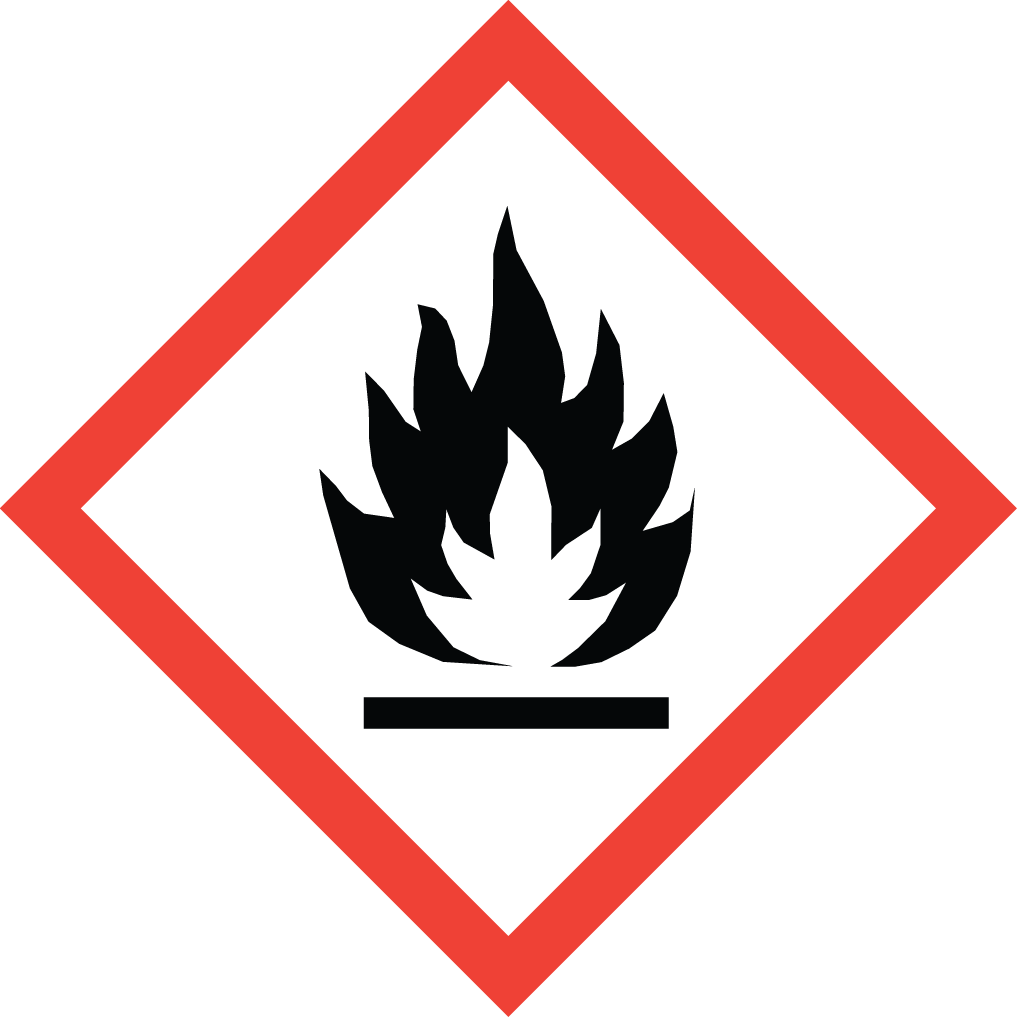
Reference Classification: Flammable liquid, Category 3. Reference signal word: Warning. Flammable liquid and vapor (H226).
Handling: Control ignition sources and static discharge during transfer. Use suitable ventilation, grounded and bonded equipment, and SDS-specified protective equipment. Avoid direct contact and inhalation of vapor or mist.
Storage: Keep containers closed in a cool, ventilated location away from ignition sources. For battery-grade use, protect the material from moisture during storage, sampling, and transfer. Follow the product SDS for temperature and incompatibility requirements.
Transport: Reference classification: UN 2366, DIETHYL CARBONATE, Class 3, Packing Group III. Verify labels, approved packaging, and shipment requirements using the current product SDS and transport documents.
Documentation: Obtain the relevant batch COA and current SDS before purchase. The SDS governs safe handling, emergency response, and disposal.
GHS02: Flammable
Packaging
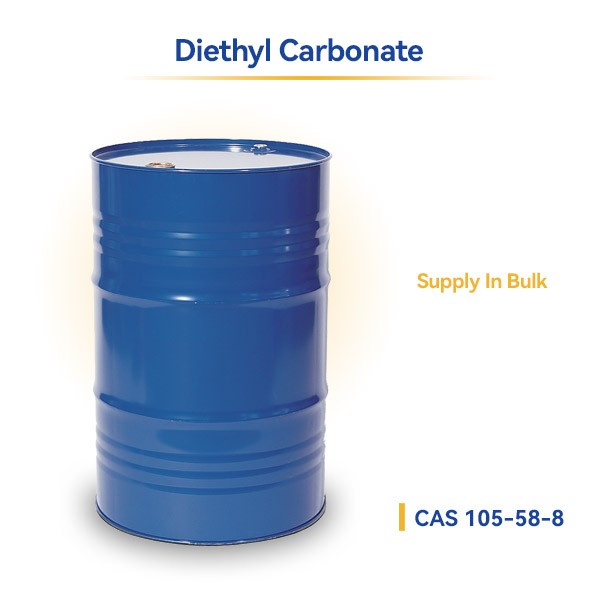
200 L steel drum
Final packaging, capacity and net weight are confirmed in the quotation and order.