
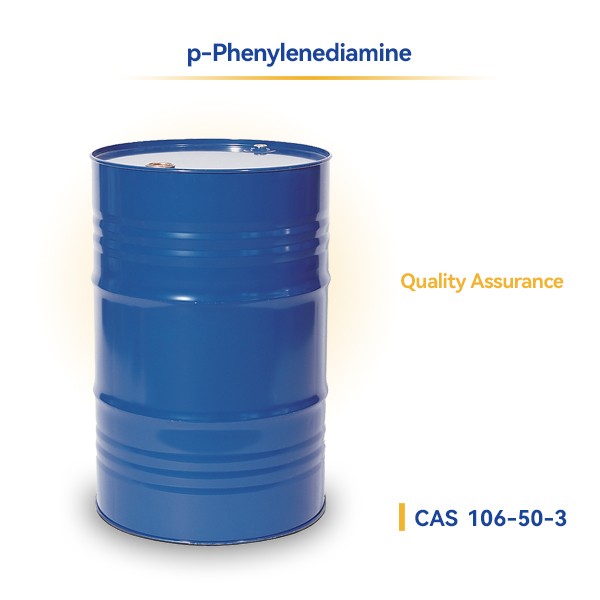
p-Phenylenediamine(PPD) CAS 106-50-3
Aure Chemical Supplies Premium p-Phenylenediamine CAS 106-50-3 for Global Industries
p-Phenylenediamine, CAS 106-50-3, serves as a key diamine in colorant and polymer sectors. This white to purplish-red crystalline solid oxidizes in air. Aure Chemical ensures steady provision for formulation needs.
Basic Information
| CAS No. | 106-50-3 |
|---|---|
| EC No. | 203-404-7 |
| Linear Formula | H2NC6H4NH2 |
| Molecular Weight | 108.14 g/mol |
| Appearance | White to purplish-red crystals |
| Melting Point | 138-140 °C (lit.) |
| Boiling point | 267 °C (lit.) |
| Density | 1.14 g/cm³ (lit.) |
| RIDADR | UN 1673 Class 6.1 Packing Group III |
| Chemical Structure | 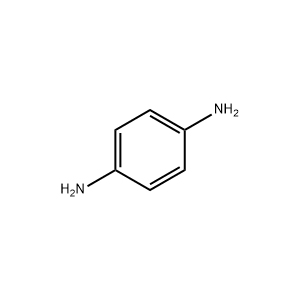 |
Key Applications
Hair dye intermediate: Essential developer in oxidative coloring for permanent shades.
Rubber antioxidant: Used to protect vulcanized rubber from aging and cracking.
Dye synthesis: Precursor for azo dyes in textiles and leather.
Polymer curing agent: Applied in epoxy resins and polyurethanes.
Photographic developer: Employed in black-and-white film processing.
Aure Chemical: Your Reliable Partner
High purity specifications and strict batch consistency: Verified through comprehensive analysis.
Efficient international shipping and bulk supply capability: Accommodates global volume demands.
Compliance with international safety and transportation standards: Includes full SDS and COA provision.
Assistance with packaging selection and shipment planning: Tailored to ensure product integrity.
Hazards Classification
GHS Classification: Acute toxicity (oral) Category 3 (GHS06); Acute toxicity (dermal) Category 3 (GHS06); Acute toxicity (inhalation) Category 3 (GHS06); Skin sensitization Category 1 (GHS07); Hazardous to the aquatic environment, acute Category 1 (GHS09).
Hazard Statements: H301 + H311 + H331 Toxic if swallowed, in contact with skin or if inhaled; H317 May cause an allergic skin reaction; H400 Very toxic to aquatic life.
UN Number: 1673
Hazard Class: 6.1 (Toxic substances)
Packing Group: III
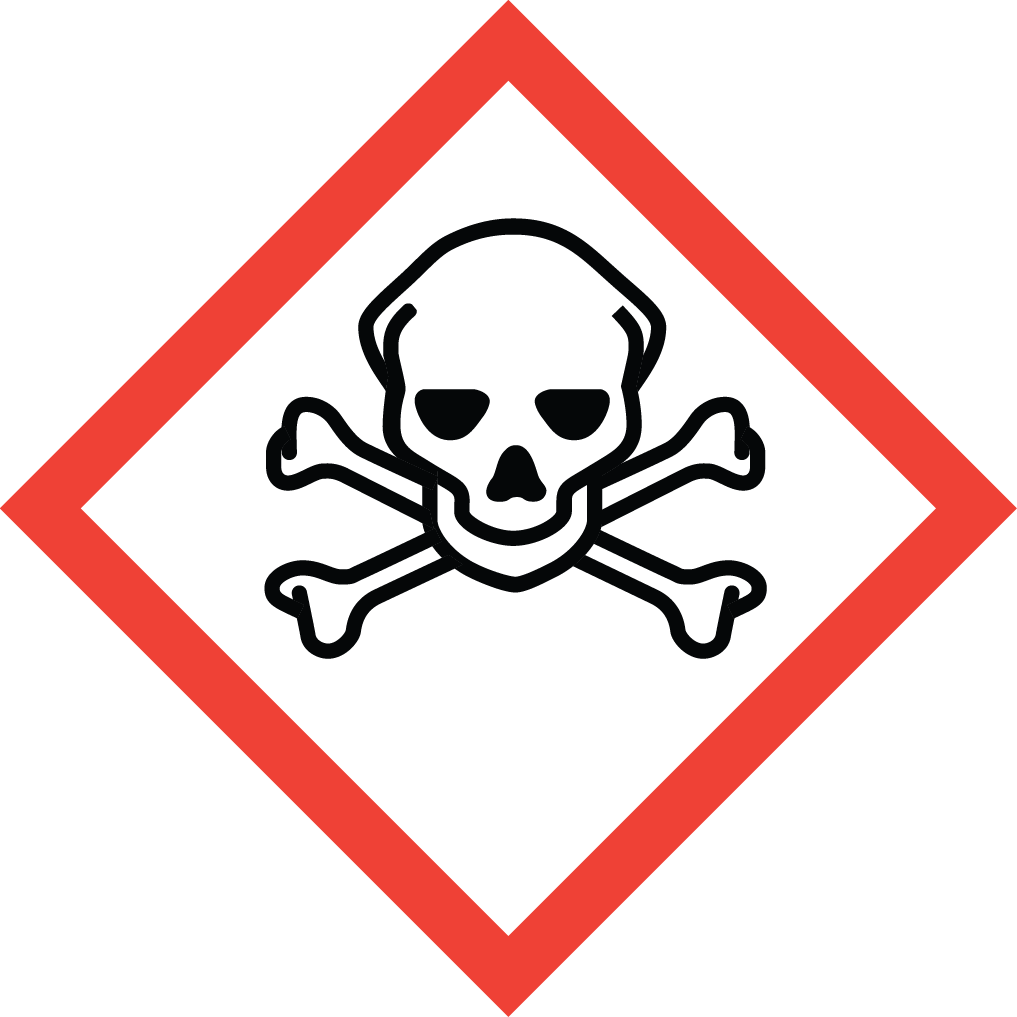


Toxic solid that can cause sensitization. Store in tightly sealed containers in a cool, dry place protected from air and light. Handle in ventilated areas with full PPE to avoid inhalation and contact.
Packaging, Logistics & Compliance Capabilities
Aure Chemical provides flexible packaging solutions, compliant logistics arrangements, and controlled storage practices to support laboratory-scale, pilot-scale, and commercial-scale global supply.
Packaging Options
- 25 kg / 50 kg bags (fiber drum, aluminum bag, HDPE drum)
- 100 kg / 200 kg steel or HDPE drums
- 500 kg / 1000 kg IBC containers
- Bulk liquids in ISO tank containers
- Customized packaging upon request
Transportation Modes
- Sea freight (FCL / LCL)
- Air freight for selected products
- Road and rail transportation
- Dangerous & non-dangerous cargo handling
- Incoterms: EXW, FOB, CFR, CIF, DAP, DDP
Storage & Handling
- Dry, cool, and well-ventilated warehouses
- Segregation by hazard class
- FIFO inventory management
- Temperature-controlled storage if required
- Regular inspection & labeling control
Documentation & Compliance
- Safety Data Sheet (SDS)
- Certificate of Analysis (COA)
- Dangerous Goods Declaration (DGD)
- Packing List & Commercial Invoice
- IMDG / IATA / ADR compliant labeling
For packaging customization or logistics consultation, please contact us.