
Reference Hazard Information: Published SDS information for TBA identifies flammability, inhalation hazards, eye and respiratory irritation, and additional health hazards. Review the current SDS for the supplied grade and physical form to establish the complete classification, label statements, exposure controls, and protective equipment.
Transport Reference: UN 1120, BUTANOLS, Class 3, Packing Group II. Confirm the actual shipping requirements using Section 14 of the current product SDS, the packaging, and the intended transport mode.
Handling and Storage: Follow the current SDS for ignition control, ventilation, compatible containers, storage, and emergency measures. Consider the temperature-dependent physical form when confirming packaging and handling instructions.
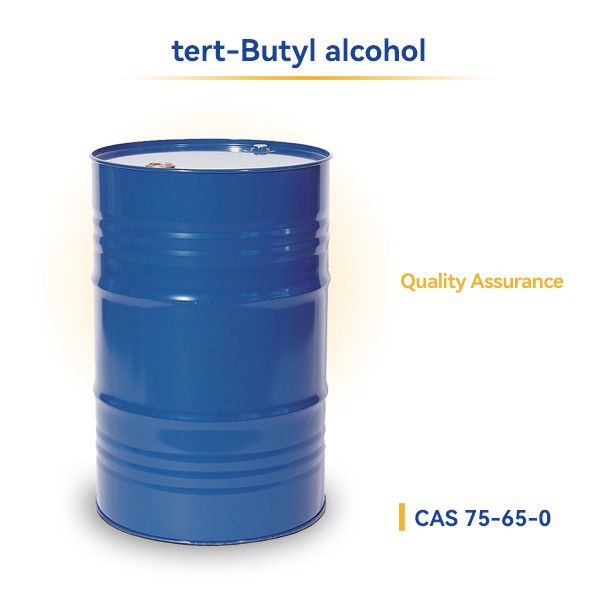
tert-Butyl alcohol CAS 75-65-0
Aure Chemical Supplies tert-Butyl Alcohol (TBA), CAS 75-65-0
tert-Butyl alcohol (TBA), also known as tert-butanol or 2-methylpropan-2-ol (CAS 75-65-0), is a tertiary alcohol with the structure (CH₃)₃COH. It is used as a process solvent and as a source of tert-butyl functionality in chemical synthesis. Aure Chemical supports China chemical sourcing, product specification review, quality documentation, supplier coordination, and export logistics for this product.
Basic Information of tert-Butyl Alcohol
| CAS No.: | 75-65-0 |
|---|---|
| EC No.: | 200-889-7 |
| Molecular Formula: | C₄H₁₀O |
| Linear Formula: | (CH₃)₃COH |
| Molecular Weight: | 74.12 g/mol |
| Appearance: | Colorless transparent liquid or crystals; physical form depends on temperature. |
| Melting Point: | Approximately 25 °C (reference property) |
| Boiling Point: | Approximately 82 °C (reference property; see the separate COA distillation results below) |
| Density at 20 °C: | 0.777–0.783 kg/L (reported specification; reference result shown below) |
| Transport Reference: | UN 1120, BUTANOLS, Class 3, Packing Group II. Confirm the requirements for the supplied grade, packaging, and transport mode using the current SDS. |
| Chemical Structure: | 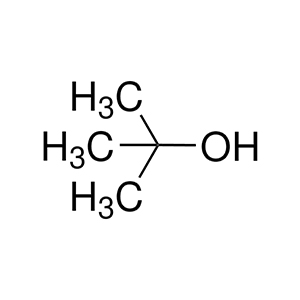 |
TBA can crystallize near ambient temperature, so the physical form should be considered when planning receipt and handling. Follow the current SDS and the instructions confirmed for the supplied packaging. The melting and boiling points above are general reference properties, separate from the reported batch analysis.
Reference Quality Analysis
The following analysis covers tert-butanol purity, APHA color, water, density, distillation endpoints, free acid, non-volatile matter, and appearance. The reported methods are included with each test item, providing a reference for reviewing composition, moisture, acidity, and residue requirements in solvent and synthesis applications.
| Test Item | Reported Specification | Reference Result |
|---|---|---|
| Appearance | Colorless transparent liquid or crystal | Colorless transparent liquid or crystal |
| Purity (tert-Butanol), % (m/m) | ≥99.5 | 99.93 |
| Color, APHA | ≤10 | 5 |
| Water content, % (m/m) | ≤0.1 | 0.0077 |
| Density at 20 °C, kg/L | 0.777–0.783 | 0.78 |
| Distillation: initial boiling point, °C | ≥81.5 | 81.8 |
| Distillation: dry point, °C | ≤83.0 | 82.8 |
| Non-volatile matter, % (m/m) | ≤0.002 | 0.001 |
Purity, water, free acid, and non-volatile matter are expressed on the mass-per-mass basis stated in the report. Density is reported at 20 °C. Initial boiling point and dry point are separate distillation measurements. Method designations are reproduced as listed, without edition years; confirm the applicable editions and procedures when agreeing quality requirements.
These reported specifications and analytical results are provided for preliminary technical evaluation. The reference results apply to one production lot and should not be interpreted as guaranteed values for every shipment. Please contact Aure Chemical to confirm the agreed supply specification and request the relevant batch-specific Certificate of Analysis (COA) before ordering.
Key Applications of tert-Butyl Alcohol
TBA is used in process chemistry, solvent formulations, and the manufacture of selected tert-butyl derivatives. Suitability of the proposed grade should be assessed against the intended process and impurity requirements.
Process and Formulation Solvent: Used as a reaction or process solvent and as a cosolvent in selected coating, cleaning, and aqueous formulations. Solvency, compatibility, water content, and residue requirements should be evaluated in the intended system.
Ethanol Denaturing: Used in selected industrial ethanol denaturing formulations. Confirm the applicable formulation, product grade, and destination requirements before specifying this use.
Chemical Intermediate: A starting material for selected tert-butyl derivatives and polymerization-initiator intermediates, including certain organic peroxide, fine chemical, and fragrance synthesis routes.
Pharmaceutical Process Applications: Can be evaluated as a reaction, extraction, or crystallization solvent. The intended process must define solvent quality, impurity controls, residual solvent requirements, and supporting documentation.
Fuel-Related Chemical Intermediates: TBA is used in the manufacture of isobutylene and selected ether intermediates for fuel-related applications. The required feedstock grade and end-use specifications should be agreed separately.
Aure Chemical: tert-Butyl Alcohol Sourcing and Export Support
Aure Chemical is a chemical sourcing and export supply business. We coordinate specification review, supplier communication, documentation, and logistics according to the requested TBA grade, quantity, and destination.
Specification Review: Review of purity, water, color, distillation endpoints, acidity, non-volatile matter, and any additional agreed requirements against the available product documentation.
Supplier Coordination: Confirmation of the proposed grade, availability, order quantity, and lead time for the intended enquiry.
COA and SDS Documentation: Coordination of available technical information, batch-specific COA documentation, and the current SDS for the product being supplied.
Packaging and Export Logistics: Review of packaging, physical form, labeling, shipping documents, and transport arrangements for the agreed order and destination requirements.
Safety, Handling & Documentation
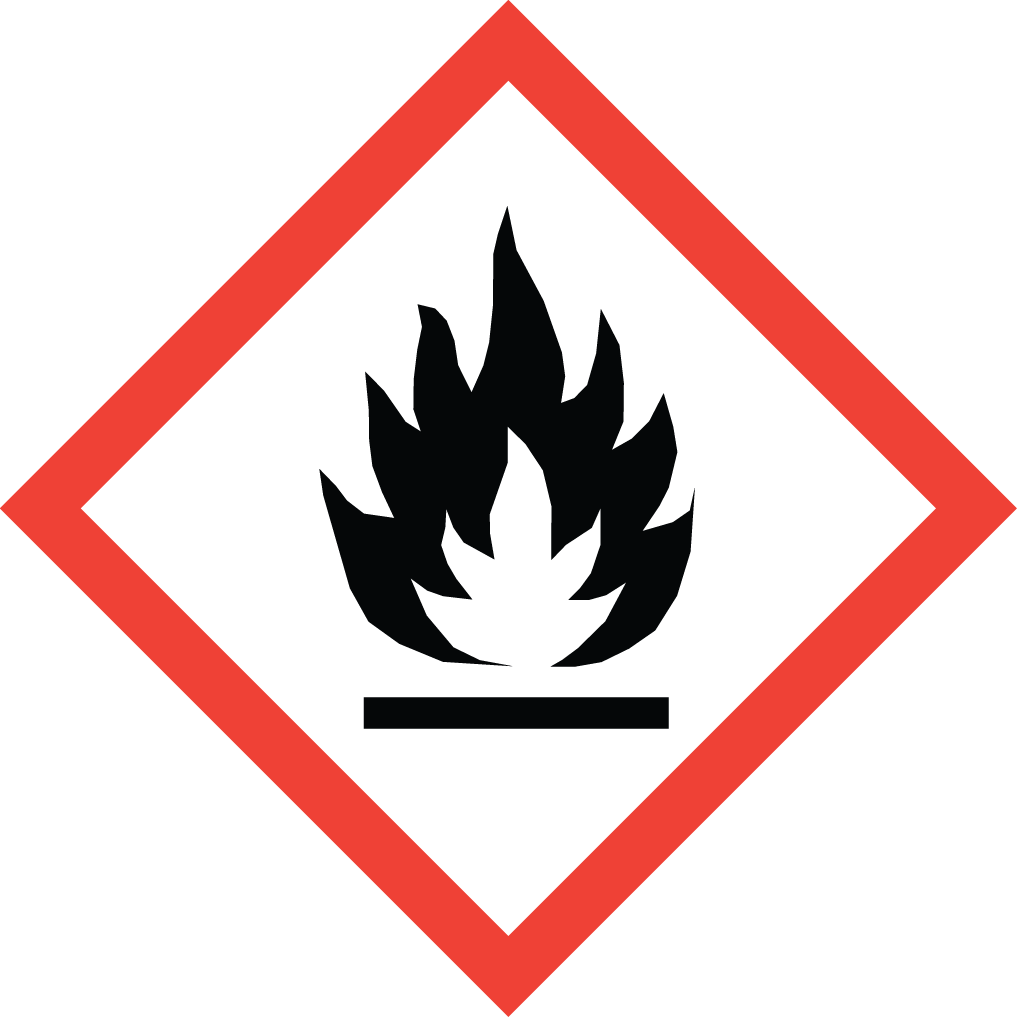


These pictograms provide general reference information. The current product SDS determines the applicable classification and labeling for the supplied grade. The reference quality analysis does not replace safety documentation.
Packaging
200 L steel drum
Final packaging, capacity and net weight are confirmed in the quotation and order.