

Monochlorophenols: 2-, 3- & 4-Chlorophenol Isomers Guide | Aure Chemical
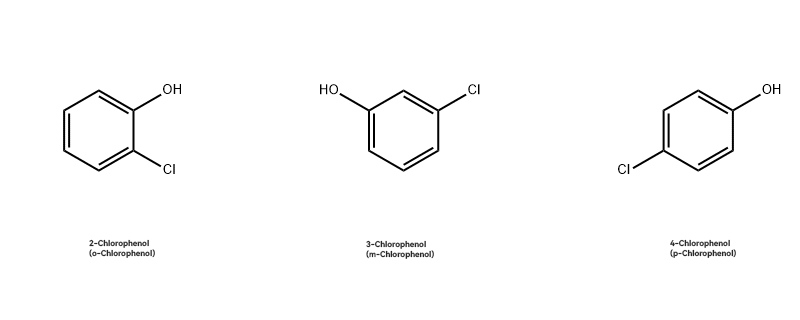
Monochlorophenols are a group of three positional isomers of chlorinated phenol that share the molecular formula C₆H₅ClO. The three compounds — 2-Chlorophenol (ortho), 3-Chlorophenol (meta) and 4-Chlorophenol (para) — differ only in the position of the chlorine atom relative to the hydroxyl group on the benzene ring.
Although these compounds are often collectively described as chlorophenol, each isomer is a distinct chemical substance with its own CAS number, physical properties, handling characteristics and downstream synthetic applications. For industrial buyers, selecting the correct chlorophenol isomer is not simply a matter of comparing price or availability. The choice depends on the required molecular structure, synthesis route, impurity tolerance, processing conditions and supply requirements.
This page provides a comprehensive overview of monochlorophenols, compares the three positional isomers, explains why chlorine position influences chemical behavior, introduces major industrial application areas and helps buyers understand how to select the appropriate chlorophenol grade for their requirements.
What Are Monochlorophenols?
Monochlorophenol refers to a phenol molecule containing exactly one chlorine substituent attached to the aromatic ring. Because the benzene ring provides three different substitution positions relative to the hydroxyl group, three constitutional isomers exist:
2-Chlorophenol (also called o-Chlorophenol or ortho-Chlorophenol) — chlorine located adjacent to the hydroxyl group (CAS 95-57-8).
3-Chlorophenol (also called m-Chlorophenol or meta-Chlorophenol) — chlorine located at the meta position (CAS 108-43-0).
4-Chlorophenol (also called p-Chlorophenol or para-Chlorophenol) — chlorine located opposite the hydroxyl group (CAS 106-48-9).
All three monochlorophenols share the same molecular formula C₆H₅ClO and molecular weight of approximately 128.56 g/mol. However, identical molecular composition does not mean identical performance. The position of the chlorine atom changes molecular symmetry, intermolecular interactions, crystal packing behavior and practical handling characteristics.
In chemical procurement, CAS identification is essential because the three isomers cannot normally be substituted for one another. A quotation request should clearly specify the required isomer, CAS number and intended application to avoid supply misunderstandings.
This article focuses specifically on monochlorophenols. Compounds containing two or more chlorine atoms, such as dichlorophenols and trichlorophenols, are chemically different materials and are outside the scope of this page.
The individual monochlorophenol products supplied by Aure Chemical include:
Comparison of 2-, 3- and 4-Chlorophenol
The most important practical differences between monochlorophenol isomers are related to molecular structure, melting behavior and physical handling characteristics under normal storage and processing conditions.
| Property | 2-Chlorophenol | 3-Chlorophenol | 4-Chlorophenol |
|---|---|---|---|
| Common name | o-Chlorophenol | m-Chlorophenol | p-Chlorophenol |
| Positional designation | Ortho | Meta | Para |
| CAS Number | 95-57-8 | 108-43-0 | 106-48-9 |
| Molecular Formula | C₆H₅ClO | C₆H₅ClO | C₆H₅ClO |
| Molecular Weight | 128.56 g/mol | 128.56 g/mol | 128.56 g/mol |
| Chlorine position relative to OH | Adjacent (2-position) | Meta (3-position) | Opposite (4-position) |
| Melting behavior | Approximately 8–9°C | Approximately 32–34°C | Approximately 42–45°C |
| Typical physical form around room temperature | Liquid | Low-melting solid; physical state may depend on temperature | Solid |
| Key handling consideration | Liquid transfer and storage handling | Temperature-sensitive solid/liquid transition | Solid handling and possible controlled warming |
| Product page | 2-Chlorophenol | 3-Chlorophenol | 4-Chlorophenol |
From an industrial handling perspective, physical form is one of the most visible differences among the three isomers. 2-Chlorophenol is normally handled as a liquid under typical ambient conditions. 4-Chlorophenol is generally supplied and stored as a crystalline solid. 3-Chlorophenol has a melting range close to common warehouse temperatures, meaning its physical state may change depending on seasonal conditions and storage environment.
These differences influence practical considerations such as sampling, drum handling, pumping, transfer equipment selection and temperature management during storage and transportation.
Why Chlorine Position Changes the Properties of Chlorophenol
Although 2-, 3- and 4-Chlorophenol have the same molecular formula, changing the chlorine position changes the three-dimensional arrangement of the molecule and therefore influences its physical and chemical behavior.
Molecular Symmetry and Crystal Packing
The para isomer, 4-Chlorophenol, has a more symmetrical molecular arrangement compared with the ortho and meta isomers. Higher symmetry can allow molecules to pack more efficiently in the crystal lattice, contributing to stronger intermolecular organization and a higher melting point.
In contrast, the ortho isomer contains chlorine adjacent to the hydroxyl group. This arrangement creates a different steric environment and influences intermolecular interactions, which contributes to its lower melting behavior compared with the para isomer.
Steric Environment Around the Hydroxyl Group
In 2-Chlorophenol, the chlorine atom is positioned next to the hydroxyl group. This proximity creates steric effects and changes the local electronic environment around the phenolic oxygen. The meta and para isomers experience less steric influence because the chlorine atom is located farther away from the hydroxyl group.
Importance in Downstream Synthesis
For chemical manufacturers and research organizations, the substitution position is often the most important selection factor. The chlorine position determines the location of functional groups in downstream intermediates and therefore affects the possible synthetic pathway.
Process chemists normally define the required molecular structure of the final target compound first, then select the appropriate chlorophenol isomer. The three monochlorophenols should therefore be considered complementary materials rather than direct substitutes.
Handling and Processing Implications
Physical differences between isomers directly influence industrial operations. Liquid 2-Chlorophenol may allow simpler transfer operations, while solid 4-Chlorophenol may require temperature control or melting procedures before use. 3-Chlorophenol requires particular attention because its melting range is close to common ambient conditions.
For a structured decision framework, buyers can refer to: How to choose between 2-, 3- and 4-Chlorophenol.
Industrial Applications of Chlorophenol Isomers
Monochlorophenols are primarily used as aromatic building blocks and chemical intermediates. Their value in industrial chemistry comes from the ability to introduce a chlorine substituent and hydroxyl functionality into an aromatic structure while maintaining a defined substitution pattern for further synthesis.
The appropriate chlorophenol isomer is selected according to the molecular structure required in the downstream product. Although 2-, 3- and 4-Chlorophenol share the same molecular formula, they are not interchangeable in most synthetic applications.
Pharmaceutical and Fine Chemical Intermediates
Chlorophenols can serve as substituted aromatic starting materials in the preparation of pharmaceutical intermediates and specialty fine chemicals. In these applications, the position of the chlorine atom is critical because it determines the regiochemistry available for subsequent functionalization steps.
For pharmaceutical and fine chemical manufacturers, important evaluation factors may include positional isomer purity, residual organic impurities, analytical consistency and compatibility with the intended synthesis route. A small difference in aromatic substitution pattern can influence downstream reaction selectivity and purification requirements.
More detailed information is available in: chlorophenols in pharmaceutical and fine chemical synthesis.
Agrochemical Intermediate Synthesis
Monochlorophenols are also used as aromatic intermediates in certain agrochemical synthesis routes. The selection of the correct isomer allows chemists to introduce functional groups at the required position of the aromatic ring during subsequent chemical transformations.
For agrochemical intermediate producers, consistency of the starting material is particularly important. Variations in positional isomer content or impurity profiles may influence downstream processing, especially in multi-step synthesis sequences.
Further discussion is available in: chlorophenols as agrochemical intermediates.
Dye and Pigment Intermediate Manufacturing
Substituted phenolic compounds are important building blocks in the production of various aromatic intermediates used in dye and pigment chemistry. The position of substitution affects the molecular structure of subsequent intermediates and can influence the performance characteristics of final products.
For manufacturers working with complex aromatic synthesis routes, maintaining consistent starting material quality and controlling isomeric impurities can help improve process reproducibility.
Learn more about: chlorophenols in dye and pigment manufacturing.
Organic Synthesis and Specialty Chemicals
Beyond specific end-use industries, monochlorophenols are versatile aromatic intermediates used in various organic synthesis pathways. Depending on the target molecule and reaction design, chlorophenol structures may participate in transformations such as ether formation, esterification and other functionalization reactions.
The appropriate isomer depends on the required substitution pattern of the final compound. Chemists typically select the starting material based on the desired molecular architecture rather than simply choosing the most readily available isomer.
A broader overview is available in: chlorophenols in organic synthesis.
Which Chlorophenol Isomer Should You Choose?
The correct chlorophenol isomer should be selected according to the chemistry that follows. There is no universally superior isomer because each positional isomer provides a different substitution arrangement and physical handling profile.
| Buyer / Process Consideration | Why It Matters |
|---|---|
| Required downstream substitution pattern | Determines which positional isomer matches the target molecular structure. |
| Reaction route and process conditions | Steric and electronic differences between isomers may influence suitability for a specific synthesis route. |
| Physical form and process temperature | Affects storage, transfer, pumping and handling requirements. |
| Purity requirement | Assay provides a basic quality indicator but does not fully describe impurity composition. |
| Positional isomer impurities | Other chlorophenol isomers may affect downstream reactions where regiochemistry is important. |
| Residual phenol and organic impurities | May influence reaction selectivity or final product quality depending on the application. |
| Moisture requirement | Important for processes sensitive to water content. |
| Documentation requirements | COA, SDS, analytical methods and impurity information should match customer expectations. |
Industrial buyers should normally define their downstream application, required substitution pattern and critical quality requirements before requesting quotations. Selecting the wrong isomer may create additional processing challenges even if the material meets a general purity specification.
For a detailed selection framework, visit: How to choose between 2-, 3- and 4-Chlorophenol.
Product information for individual isomers can be reviewed here:
Quality Considerations for Industrial Chlorophenol Buyers
For industrial users, assay or purity is only one part of chlorophenol quality evaluation. A suitable raw material assessment normally includes the complete analytical profile and its relationship to the intended application.
Assay and Chemical Purity
Assay is an important specification parameter, but a high assay value alone does not guarantee suitability for every synthesis route. Buyers should also evaluate impurity composition and analytical methodology.
Positional Isomer Impurities
Because 2-, 3- and 4-Chlorophenol have identical molecular formulas, analytical differentiation between isomers is important. Even small amounts of another positional isomer may become relevant in synthesis routes where the exact aromatic substitution pattern is required.
Residual Phenol and Related Organic Impurities
Residual phenol or other organic impurities may influence downstream reactions depending on process sensitivity. Acceptance limits should be defined according to the customer's application requirements and confirmed through the applicable batch COA.
Moisture and Analytical Documentation
For moisture-sensitive processes, water content may be an important parameter. Buyers should confirm testing methods, specification limits and documentation requirements before purchasing.
Chromatographic Analysis
Chromatographic analysis, such as GC testing, provides valuable information regarding assay, related organic impurities and positional isomer composition. Reviewing the complete analytical profile often provides more practical information than considering a single purity number.
For guidance on matching product selection with quality requirements, refer to: the chlorophenol isomer selection guide.
Sourcing Monochlorophenols from China
International buyers evaluating Chinese chemical suppliers typically consider more than product availability. Specification consistency, communication efficiency, documentation capability and export experience are important factors when establishing a stable supply relationship.
As a China-based chemical supplier, exporter and sourcing partner, Aure Chemical supports international customers in evaluating monochlorophenol supply requirements, coordinating product information and arranging export documentation according to project needs.
For chlorophenol inquiries, buyers are encouraged to provide:
Required chlorophenol isomer or CAS number
Target specification or critical quality parameters
Application or downstream chemistry (if available)
Estimated annual or project quantity
Destination country or port
Required packaging and documentation
Aure Chemical can assist with specification review, COA confirmation, SDS/TDS documentation and export coordination. Product availability, packaging options and shipment arrangements should always be confirmed according to the specific project.
Packaging, Export and Supply Considerations
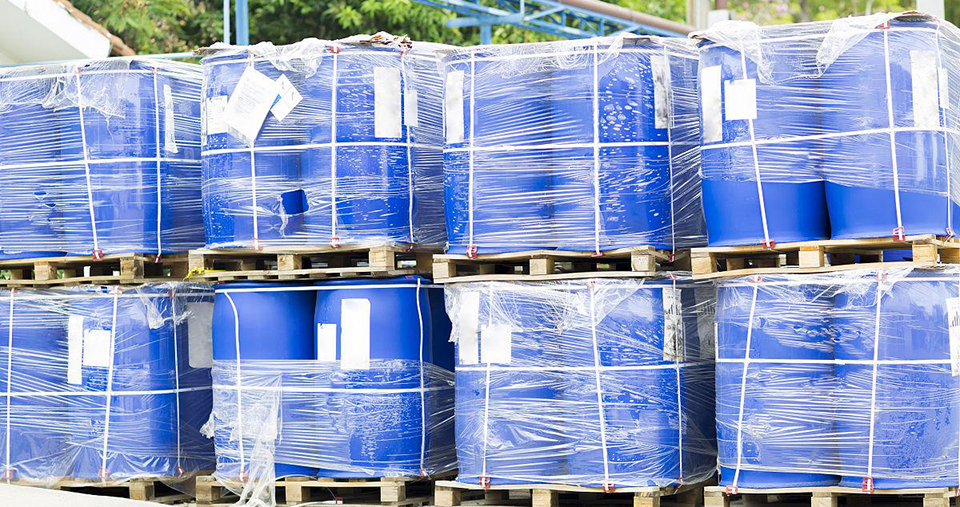
The appropriate packaging and shipment method for monochlorophenols depends on the specific isomer, physical form, order quantity, destination requirements and transportation conditions.
Important considerations for international buyers include:
Packaging compatibility with liquid or solid physical form
Storage and handling requirements related to melting behavior
Transport classification and dangerous goods documentation where applicable
Destination-country import requirements
Commercial documents including invoice, packing list, COA and SDS
Incoterm selection according to shipment requirements
Current product-specific information is available on the individual product pages:
Frequently Asked Questions About Monochlorophenols
What are the three monochlorophenol isomers?
The three monochlorophenol positional isomers are 2-Chlorophenol (ortho-Chlorophenol, CAS 95-57-8), 3-Chlorophenol (meta-Chlorophenol, CAS 108-43-0) and 4-Chlorophenol (para-Chlorophenol, CAS 106-48-9). They share the same molecular formula C₆H₅ClO but have different chlorine positions relative to the hydroxyl group.
What is the difference between 2-, 3- and 4-Chlorophenol?
The difference is the position of the chlorine atom on the aromatic ring. In 2-Chlorophenol, chlorine is adjacent to the hydroxyl group. In 3-Chlorophenol, chlorine is located at the meta position. In 4-Chlorophenol, chlorine is opposite the hydroxyl group. This positional difference affects molecular symmetry, melting behavior, physical form and downstream synthesis suitability.
Are ortho-, meta- and para-Chlorophenol the same chemical?
No. They are different constitutional isomers with different CAS numbers and physical properties. Although they have the same molecular formula, they should not generally be considered interchangeable because the substitution position determines the structure of downstream molecules produced from them.
Why do the three chlorophenol isomers have different melting points?
The difference mainly comes from molecular symmetry, crystal packing efficiency and intermolecular interactions. The para isomer has a more symmetrical structure, which generally allows more efficient crystal packing and contributes to its higher melting point. The ortho isomer has a different steric environment because chlorine is adjacent to the hydroxyl group.
Which chlorophenol isomer should be used for organic synthesis?
The appropriate isomer depends on the required substitution pattern of the target molecule and the intended synthesis route. There is no universally preferred chlorophenol isomer. Process chemists usually select the starting material according to the structure of the desired downstream intermediate or final compound.
A structured selection approach is available in:How to choose between 2-, 3- and 4-Chlorophenol.
Can chlorophenol physical form change with temperature?
Yes. The physical state of monochlorophenols depends on their melting behavior and storage temperature. 2-Chlorophenol is generally liquid under normal ambient conditions, while 4-Chlorophenol is normally solid. 3-Chlorophenol has a melting point close to common warehouse temperatures and may require additional temperature management during storage and handling.
What should industrial buyers check on a chlorophenol COA?
Industrial buyers should evaluate more than assay alone. Important considerations may include positional isomer content, residual phenol or related organic impurities, moisture where relevant, analytical methods, batch identification and consistency between supplier specifications and actual COA results.
Can Aure Chemical provide samples or commercial quantities of monochlorophenols?
Aure Chemical supports international customers with monochlorophenol sourcing, sample evaluation where feasible and commercial supply coordination. Availability, packaging, documentation and shipment arrangements depend on the specific isomer, quantity and destination requirements.
Customers are encouraged to provide the CAS number, required specification, application information and estimated quantity so that Aure Chemical can better evaluate the appropriate supply solution.
Need Help Selecting a Chlorophenol Isomer?
Choosing the correct monochlorophenol isomer requires balancing chemical requirements, quality expectations and supply considerations. Aure Chemical works with international customers to support chlorophenol sourcing projects and provide relevant technical and commercial information.
When contacting Aure Chemical, please provide the following information:
Required chlorophenol isomer or CAS number
Target specification or critical quality parameters
Intended application or downstream chemistry
Estimated order quantity or annual requirement
Destination country, port or delivery location
Preferred packaging requirements
Required technical and export documents
Aure Chemical can assist with:
Product specification review
COA and SDS documentation confirmation
Supply coordination with qualified Chinese chemical sources
Export documentation and shipment arrangement support
To discuss your monochlorophenol requirements, contact Aure Chemical with your project details.
Recommended Supporting Resources
For more detailed information about individual chlorophenol isomers and their applications, please explore the following resources:
About Aure Chemical
Aure Chemical is a China-based chemical supplier, exporter and sourcing partner serving international customers with specialty chemicals and industrial raw materials.
Through supply chain coordination, technical communication and export experience, Aure Chemical helps customers evaluate suitable chemical sources, confirm documentation requirements and arrange international shipments according to project needs.
For monochlorophenol projects, Aure Chemical supports customers with product information, specification discussion, COA review, SDS documentation and supply coordination.