
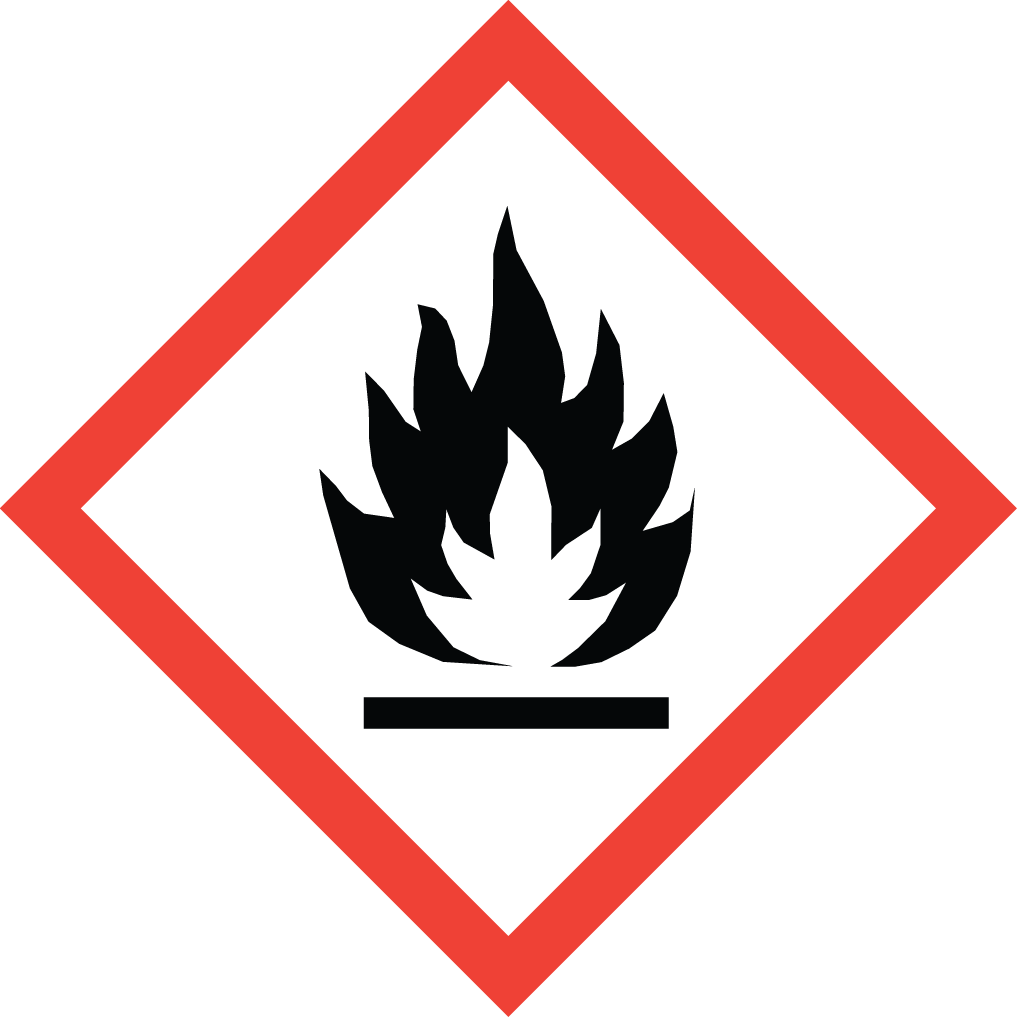
Reference GHS classification: Flammable liquid, Category 2; acute toxicity, Category 4 (oral, dermal, and inhalation); skin irritation, Category 2; and eye irritation, Category 2. Signal word: Danger.
Hazard summary: Highly flammable, harmful by ingestion, skin contact, or inhalation, and irritating to skin and eyes. Prevent direct contact and vapor exposure.
Handling and storage: Use effective ventilation and suitable chemical-resistant gloves, clothing, and eye protection. Control ignition sources and static discharge. Keep containers tightly closed in a cool, well-ventilated location, following the SDS for incompatible materials and other storage requirements.
Transport reference: UN 1282, PYRIDINE; Class 3 (flammable liquid); Packing Group II. Confirm the applicable product and transport-mode requirements before shipment.
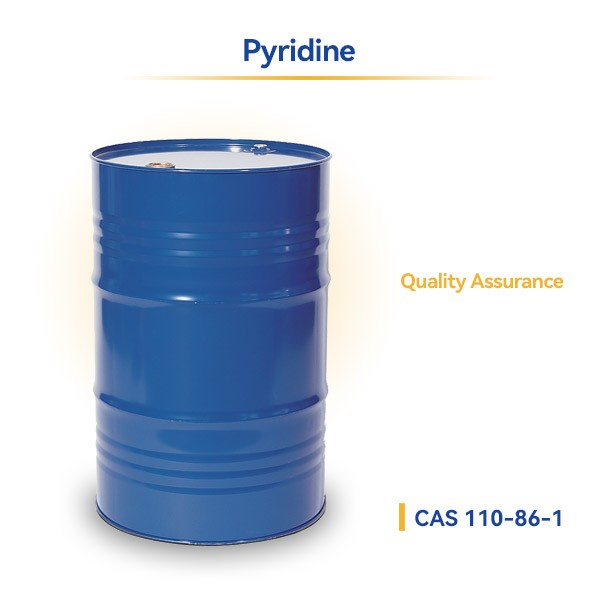
Pyridine CAS 110-86-1
High-Purity Pyridine (CAS 110-86-1) from Aure Chemical – Your Trusted Source
Pyridine (CAS 110-86-1), also known as azabenzene, is a six-membered aromatic nitrogen heterocycle. Its ring nitrogen gives it basic and coordinating properties, supporting its use as a solvent, acid acceptor, and synthesis intermediate. Industrial uses include selected pharmaceutical and agrochemical processes, piperidine production, and specialty chemical manufacturing. Aure Chemical supports China sourcing, specification review, quality documentation, and international export coordination for pyridine.
Basic Information of Pyridine
The following identity and physical properties are general references for pyridine. Published physical values are separate from the reported quality specifications below; neither should be read as a batch-specific analysis result.
| CAS No.: | 110-86-1 |
|---|---|
| EC No.: | 203-809-9 |
| Molecular Formula: | C₅H₅N |
| Molecular Weight: | 79.10 g/mol |
| Appearance: | Clear liquid (general reference; no batch appearance result is provided in the quality standard sheet) |
| Odor: | Characteristic, unpleasant odor (general reference) |
| Melting Point: | −42 °C (literature reference) |
| Boiling Point: | 115 °C (literature reference) |
| Density: | 0.978 g/mL at 25 °C (literature reference). The reported quality specification below applies at 20 °C. |
| Water Solubility: | Miscible with water (general reference) |
| Flash Point: | 20 °C, closed cup (published reference) |
| Chemical Type: | Aromatic nitrogen heterocycle; basic solvent and synthesis intermediate |
| Transport Reference: | UN 1282, PYRIDINE; Class 3; Packing Group II. Confirm using the current product SDS and shipment documents. |
| Chemical Structure: | 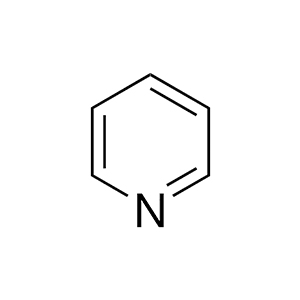 |
Reference Quality Specifications
The available technical sheet lists quality requirements for pyridine content, water, color, evaporation residue, chloride, sulfate, ammonia, and density. It is a specification sheet, not a batch-specific Certificate of Analysis (COA). No measured batch results are provided, so the result column is marked accordingly.
| Test Item | Reported Specification | Reference Result |
|---|---|---|
| Pyridine content (wt%) | ≥99.90 | Not provided |
| Water (wt%) | ≤0.05 | Not provided |
| Color (Hazen, Pt-Co) | 20 (limit direction not stated) | Not provided |
| Evaporation residue (wt%) | ≤0.01 | Not provided |
| Chloride, as Cl (wt%) | ≤0.005 | Not provided |
| Sulfate, as SO₄²⁻ (wt%) | ≤0.001 | Not provided |
| Ammonia, NH₃ (wt%) | ≤0.002 | Not provided |
| Density at 20 °C (g/cm³) | 0.980–0.985 | Not provided |
The color entry is printed as 20 Hazen without an inequality symbol; its acceptance limit needs confirmation. No test methods are specified in the sheet. The listed density range is a requirement at 20 °C, not a measured result or a value at 25 °C.
These reported requirements are provided for preliminary technical review. Please confirm the applicable supply specification, color limit, and test methods with Aure Chemical, and request the relevant batch-specific COA before ordering. The sheet does not establish an analytical, ACS, or pharmaceutical grade.
Primary Applications of Pyridine
Pyridine can serve as a reaction medium, base, and precursor to other nitrogen-containing compounds. The appropriate grade and impurity limits depend on the process, particularly where water, inorganic residues, or residual pyridine affect downstream operations.
Solvent and acid acceptor: Used in selected organic reactions, including acylation processes, where its solvency and basicity are useful. Reaction compatibility, solvent recovery, and residual solvent requirements should be evaluated for the process.
Pharmaceutical and fine chemical intermediates: Used as a solvent, reagent, or starting material in selected routes to pyridine-containing compounds. The required product grade and impurity limits should be established for the intended synthesis.
Agrochemical intermediates: Used in the manufacture of selected herbicide and insecticide intermediates. Its role and required specification depend on the target molecule and manufacturing route.
Piperidine production: Pyridine is a feedstock for piperidine manufacture through hydrogenation of the aromatic ring. Catalyst selection and feedstock quality requirements are process-specific.
Dyes and specialty formulations: Used as a solvent or intermediate in selected dye, resin, rubber chemical, and textile water-repellent processes. The quality standard shown here does not establish the performance of a finished formulation.
Analytical reagent formulations: Pyridine served as the base in classical pyridine-containing Karl Fischer reagents. Many current Karl Fischer systems use pyridine-free formulations, so reagent compatibility and analytical grade requirements must be confirmed separately.
Selected denaturant formulations: Pyridine has been used in alcohol denaturing formulations. Suitability depends on the specified formulation and intended industrial use.
Why Choose Aure Chemical for Your Pyridine Supply?
Aure Chemical is a chemical sourcing, trading, and export supply company. We coordinate supplier information, agreed specifications, quality documents, and shipment arrangements for the proposed order.
Specification review: Review pyridine content, water, evaporation residue, chloride, sulfate, ammonia, density, and the color acceptance limit against buyer requirements.
Quality documentation: Request the relevant batch COA and current product SDS. A specification sheet provides acceptance requirements; measured batch results require a separate COA.
Supplier coordination: Confirm available grade, quantity, packaging, lead time, and any additional analytical requirements before order confirmation.
Export and logistics coordination: Review dangerous goods packaging, labeling, shipping documentation, route suitability, and destination requirements with the relevant suppliers and logistics providers.
Safety, Handling & Documentation
The following summary and pictograms reflect published reference safety information for pyridine. Confirm the complete classification, local labeling, exposure controls, and storage requirements using the current SDS for the supplied product.

Packaging
200 L steel drum
Final packaging, capacity and net weight are confirmed in the quotation and order.