
2,2'-Bis(4-aminophenoxyphenyl)propane (BAPP) CAS 13080-86-9
BAPP CAS 13080-86-9 for Processable Polyimide Synthesis
2,2-Bis[4-(4-aminophenoxy)phenyl]propane (BAPP, CAS 13080-86-9), also known as bisphenol A bis(4-aminophenyl) ether, is an ether-containing aromatic diamine monomer used in polyimide synthesis. Its structure contains two terminal primary aromatic amino groups, two aryl ether linkages, and a central isopropylidene bridge. Aure Chemical supports China sourcing, specification review, quality documentation, and export coordination for this monomer.
BAPP belongs to the broader category of polyimide diamine monomers and is part of Aure Chemical’s polyimide diamine monomers supply portfolio. Its ether linkages and isopropylidene unit provide structural variables when evaluating chain mobility, solution behavior, and processing. The balance between processability, thermal properties, and film performance depends on the complete polymer formulation.
Basic Information of BAPP
| Product Name | 2,2-Bis[4-(4-aminophenoxy)phenyl]propane |
|---|---|
| Abbreviation | BAPP |
| CAS Number | 13080-86-9 |
| Product Type | Ether-containing aromatic diamine monomer |
| Molecular Formula | C₂₇H₂₆N₂O₂ |
| Molecular Weight | 410.51 g/mol |
| Appearance | White powder (reported specification) |
| Purity (HPLC) | Reported specification: ≥99.9% by HPLC; see Reference Quality Analysis for the reference batch result |
| Main Application | Diamine building block for polyimide resin and film development |
| Package | Reference options: 1 kg/bottle or 20 kg/drum; availability and alternative packaging to be confirmed for each order |
| Documents | Available COA, SDS and TDS can be reviewed for the proposed grade; request the applicable batch-specific COA before ordering |
| Storage | The report recommends a sealed container and dry storage in a cool, dark place. Confirm the applicable requirements using the current product SDS. |
| Molecular Structure | 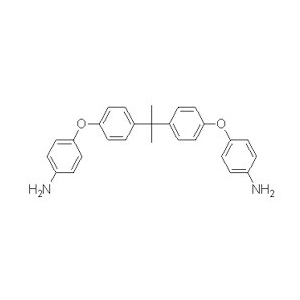 |
Reference Quality Analysis
The following appearance, HPLC purity, moisture, and metal-testing entries provide a technical reference for evaluating BAPP as a polyimide diamine monomer. The metal entry records a compliance status, while purity and moisture are reported as numerical batch results.
| Test Item | Reported Specification | Reference Result |
|---|---|---|
| Appearance | White powder | White powder |
| Purity (HPLC), % | ≥99.9 | 99.96 |
| Metal testing | Single metal ≤1 ppm | Approved |
| Moisture, % | ≤0.1 | 0.01 |
The metal-testing result is reported as “Approved” against “Single metal ≤1 ppm.” The COA does not identify the metals covered, individual concentrations, analytical method, or detection limits. Confirm the required element panel and supporting data if metal control is critical to the intended process.
HPLC is identified as the purity method, but the chromatographic procedure and percentage calculation basis are not specified. The moisture test method is not stated. Additional requirements, including ionic impurities or residual solvents, should be agreed separately.
These values describe one reference batch and are provided for preliminary technical evaluation. They should not be interpreted as guaranteed values for every shipment. Contact Aure Chemical to confirm the applicable quality requirements and request the relevant batch-specific Certificate of Analysis (COA) before ordering.
Key Features in Polyimide Design
Aromatic diamine functionality: BAPP provides two terminal amino groups for condensation with suitable dianhydrides, placing it among the polyimide diamine monomers used in resin development.
Ether and isopropylidene linkages: The aryl ether bonds add conformational freedom, while the central isopropylidene unit changes backbone geometry. Their influence on solubility, chain packing, and processing depends on the complete polymer structure.
Processing and thermal balance: Aromatic rings and flexible linkages are combined in one monomer. Glass transition behavior, thermal stability, mechanical properties, and film formation must be assessed in the resulting polyimide.
BAPP may be evaluated in flexible and processable polyimide systems, with attention to reaction-medium compatibility, solution viscosity, and processing conditions.
Monomer quality, stoichiometric balance, dianhydride selection, solvent system, and imidization conditions affect polymer development. The reference COA provides monomer quality information and does not establish finished-material performance.
Pairing BAPP with Dianhydride Monomers
In polyimide route development, BAPP may be evaluated with selected polyimide dianhydride monomers. Ether-containing dianhydrides such as ODPA CAS 1823-59-2 provide one structural option for investigating backbone mobility and processing behavior.
Aromatic dianhydrides such as BPDA CAS 2420-87-3 or BTDA CAS 2421-28-5, and fluorinated dianhydrides such as 6FDA CAS 1107-00-2, offer alternative backbone structures for formulation screening. Confirm monomer dissolution, polymerization behavior, and film formation for each selected combination, then measure the thermal, optical, dielectric, or dimensional properties required by the application.
Application Context of BAPP in Polyimide Systems
BAPP is a structural diamine for polyimide resin and film development. Its ether-containing, bisphenol A-derived architecture is relevant when studying the relationship between polymer structure and processing. Application suitability requires formulation and performance evaluation in addition to monomer specification review.
Flexible and processable polyimide systems – assess solution behavior, film processing, and the balance between chain mobility and thermal properties.
Specialty functional polyimide materials – evaluate ether-containing diamine structures in selected resin and copolyimide development routes.
Electronics and semiconductor polyimide applications – confirm insulation and dielectric requirements, including the identities and limits of metals or ionic impurities requiring control.
High-temperature polyimide applications – establish thermal, dimensional, and mechanical performance in the final formulation under the intended use conditions.
COA, SDS and Technical Documentation
Aure Chemical is a chemical trading and export supply company supporting specification review, supplier coordination, quality documentation, packaging confirmation, and international logistics for BAPP CAS 13080-86-9. The reference quality analysis above summarizes the available batch COA. Available SDS and TDS documents can be reviewed for the proposed grade; confirm the agreed requirements and relevant batch documentation before ordering.
Please share the required purity, target specification, quantity, destination country or port, preferred packaging method and required documents so we can review availability, documentation support and export packing options.
Contact Aure Chemical for BAPP documentation and quotation support.
Safety, Handling & Documentation
Published reference SDS for BAPP CAS 13080-86-9 include the hazard information below. Classifications can differ between supplier documents and jurisdictions. Confirm the applicable classification, labeling, protective measures, and transport requirements using the current SDS for the supplied grade and destination.
Reference GHS Classification: Acute oral toxicity, Category 4; skin sensitization, Category 1.
Hazard Statements: H302: Harmful if swallowed. H317: May cause an allergic skin reaction.
Signal Word: Warning.

Avoid dust inhalation, ingestion, and direct skin or eye contact. Use suitable ventilation and protective gloves, clothing, and eye protection selected according to the current SDS and workplace assessment. Prevent environmental release and arrange appropriate waste disposal. Keep the container sealed and the material dry, cool, and protected from light in accordance with the confirmed storage instructions.
Confirm shipment classification, packaging, and labeling for the actual order. The reference COA provides quality test results and storage advice; it does not replace the SDS or transport documentation.
Packaging
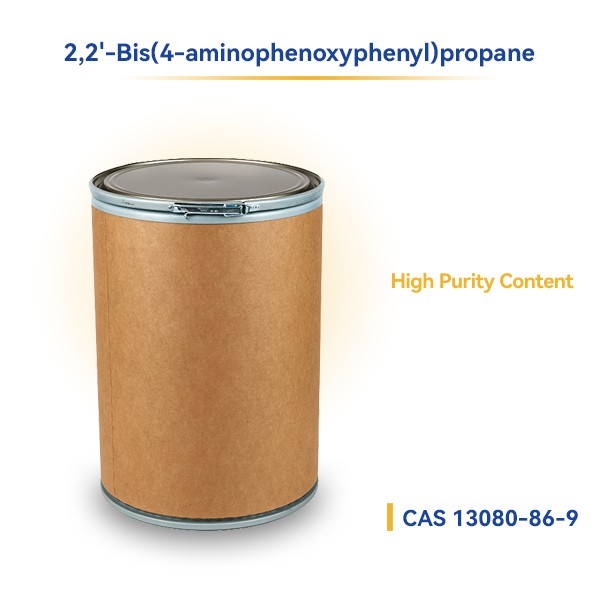
10kg, 20kg Fiber drum
Final packaging, capacity and net weight are confirmed in the quotation and order.